

Diamond grinding tools: What are the product advantages and usage precautions of diamond drill bits?

Aug 18,2022

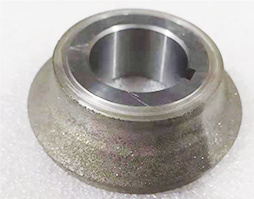
Diamond grinding tools: Diamond drill bits are integral drill bits, with no moving parts in the entire bit, making the structure relatively simple. They have high strength, high wear resistance, and impact resistance. Diamond drill bits have advantages such as fast speed, more footage, long service life, stable operation, fewer downhole accidents, and good borehole quality when drilling in soft to hard formations. Diamond drill bits not only have a long service life but can also be reused.

  金刚石钻头为一体式钻头,整个钻头没有运动部件,结构相对简单。它具有高强度、高耐磨性和抗冲击性。金刚石钻头在软中硬地层钻进时,具有速度快、进尺多、使用寿命长、运行稳定、井下事故少、井筒质量好等优点。金刚石钻头不仅使用寿命长,而且可以重复使用。以下是它的产品优势和使用注意事项:  


  一、 产品优势


  1、力平衡设计使钻头具有良好的方向性,适用于井下电机定向钻进,径向振动小;


  2、复合片在钻头不同位置的不同结构合理布置,使钻头更具侵略性和耐磨性;


  3、将动态流场模拟技术应用于水力设计,优化井底流场,有利于提高排屑速度和防止泥袋。
       a2c4abe7-5ce0-417c-ad18-25786266757b.jpg

  二、 使用注意事项


  (一) 钻前准备


  1、检查产品有无钻头体损坏、缺齿等情况,井底清洁,无坠物。


  2、小心搬运该产品,将金刚石钻头放在橡胶垫或木板上。禁止将金刚石钻头直接放置在铁板上。


  3、检查金刚石钻头的切削齿是否损坏,钻头内是否有异物,喷嘴孔内是否有O型圈。根据需要安装喷嘴。


  (二) 金刚石钻头构造


  1、清洁产品阳螺纹或阴螺纹,涂抹螺纹油。


  2、将卸扣卡在金刚石钻头上,放下钻柱,使其与公扣或母扣接触,进行扣合。


  3、将它和卸扣一起放入转盘的衬套中,然后按照推荐的拧紧扭矩值拧紧螺纹。


  (三) 下钻


  1、缓慢下放金刚石钻头,特别是通过转盘、防喷器和套管悬挂器,以保护切削齿。


  2、上一次起下钻时注意堵塞井段,起下钻时应缓慢通径,防止出现缩径和卡钻现象。


  3、当单管距井底约1时,以50~60rpm的钻速开始旋转,以额定排量启动泵,冲洗井底。


  4、注意重量指示器和扭矩,使金刚石钻头顺利接触井底。


  (四) 金刚石钻头铰孔


  1、不建议使用金刚石钻头对井段进行扩孔。


  2、如果需要铰孔,在额定排量下以低扭矩缓慢铰孔。


  (五) 金刚石钻头建模


  1、保持额定排量,将金刚石钻头降至井底。


  2、采用至少1m的慢钻建立井底模型。


  3、将钻压增加到正常钻井值,每次增加10kN。严禁加压过大,否则会导致金刚石钻头早期损坏。


  4、保持钻压恒定,调整钻速,以获得更佳钻井参数组合。


  (六)金刚石钻头的正常钻进


  1、当磨蚀性强或砂岩、泥岩坚硬时,应降低钻速,以延长产品的使用寿命。


  2、当遇到地层变化或夹层时,调整钻速和产品,以保持更佳钻井效率。


Related Articles

Using diamond grinding wheels to dress the grinding wheel, the profile is opposite to the required wheel profile, and it moves in the same direction as the wheel being dressed, shaping the wheel into the desired form. The dedicated grinding machine for lock clamps uses diamond wheels to dress the grinding wheel, which is then used to grind valves. The diamond wheels we use are coated with a layer of uniformly distributed diamond particles on a steel substrate through electroplating. When using them, two points must be noted: First, when loading and unloading the diamond wheel, gently tap with a copper rod to prevent diamond particles from falling off. Second, before dressing the grinding wheel with the diamond wheel, it is essential to adjust the relative position of the diamond wheel and grinding wheel in manual mode. For example: The automatic compensation amount for J4-048 lock clamp grinder is 0.01mm with a compensation amount of 50mm. To meet this compensation amount, a grinding wheel grit size of 120# is generally selected. When grinding lock clamp grooves, we dress the grinding wheel once every 20 products, taking 30 seconds for dressing time and maintaining a dressing line speed ratio of 0.59. Sampling tests show that surface roughness Ra is between 0.63 and 1.25μm, and shape and positional accuracy are within 0.03mm, fully meeting customer requirements. Practice has proven that one diamond wheel can produce 60,000 to 80,000 qualified products. The precision of lock clamp grooves mainly relies on the accuracy of the diamond wheels. As a core component of lock clamp groove grinders, the design of its profile is particularly important. Using diamond wheels produced by Dongjin in Henan for dressing grinding wheels ensures high precision and long service life while achieving good surface roughness in workpiece processing, making it especially suitable for mass production.

Mar 18,2022


Researchers in Australia have made breakthrough progress using the power of diamonds, potentially revolutionizing the way the human body accepts biomedical implants. Researchers from RMIT University successfully coated 3D printed titanium implants with diamonds. This is the use of 3D printed diamond implants for biomedical and orthopedic applications, involving surgeries related to the human musculoskeletal system. Although titanium provides a fast, accurate, and reliable material for medical-grade and patient-specific implants, our bodies sometimes reject this material due to compounds on titanium that prevent effective interaction between tissues and bones with biomedical implants. Synthetic diamonds offer a cost-effective solution to this problem. This breakthrough was achieved by biomedical engineer Dr. Kate Fox and her team at RMIT's School of Engineering. The coating was produced using a microwave plasma process at the Melbourne Nano Manufacturing Centre. The combination of titanium scaffolds with diamonds forms a biomaterial. "This technology will take several more years to launch; many steps need to be taken before it can be used by patients," Fox said. "But what we have done is a key step in a long and incredible journey." Postdoctoral researcher Aaqil Rifai is collaborating with Fox on this new technology research, stating, "Diamonds are very effective because carbon is a major component of the human body. Carbon has incredible biocompatibility." Rifai added, "Our bodies easily accept diamonds and use them as platforms for complex material interfaces." In addition to orthopedics, diamonds are also used to coat cardiovascular stents—catheters that help keep heart arteries open—as well as in bionics and prosthetics. Currently, researchers are focusing on how to apply this technology in orthopedics. "3D printing is a groundbreaking revolution in modern times. Through 3D printing, we can design specific medical-grade implants. This technology is fast, accurate, reliable, and labor-saving," Rifai said: "The scalability of 3D printing is rapidly increasing; therefore, we can foresee that diamond coatings will become increasingly common in orthopedics in the near future." Diamonds are one of the special materials found in nature with properties such as hardness, low friction coefficient, high elastic modulus, high thermal conductivity, high insulation properties, wide bandgap, high sound propagation rate, and good chemical stability. Although natural diamonds possess these characteristics, they have only existed as gemstones; their variability and rarity greatly limit their applications. However, CVD diamond films prepared by Luoyang Yuxin Diamond combine these excellent physicochemical properties at a lower cost than natural diamonds and can be fabricated into various geometric shapes with broad application prospects in industries such as electronics, optics, and mechanics.

Aug 16,2021


In June 2020, China's foreign exchange for bearing imports was $368 million, an increase of 10.13% month-on-month and a year-on-year increase of 34.64% compared to June last year, with an increase of 26.47 percentage points from the previous month's growth rate of 8.17%. The number of bearing imports reached 191 million sets, a month-on-month increase of 3.74%, a year-on-year increase of 26.61% compared to June last year, and an increase of 22.61 percentage points from the previous month's growth rate of 4%. As of June 2020, China had accumulated foreign exchange for imports totaling $1.907 billion, which is a year-on-year increase of 12.37%. This is an increase of 4.27 percentage points from last month's rate of 8.1%. The number of imported bearings was 1.151 billion sets, an increase of 15.31% compared to the same period last year, and an increase of 2.02 percentage points from last month's growth rate of 13.29%. From the perspective of imported bearing categories, the foreign exchange for tapered roller bearings increased by 45.98% year-on-year, becoming the main driver for bearing import foreign exchange; followed by bearing parts with a year-on-year growth rate of 25.3%, other ball bearings with a growth rate of 23.24%, cylindrical roller bearings with a growth rate of 15.39%, and spherical roller bearings with a growth rate of 13.73%. It is not difficult to see that under the new situation, significant changes are occurring in the structure of the bearing market. From the perspective of importing countries, foreign exchange from Japan reached $490 million, ranking first with a year-on-year growth rate of 4.61%. Germany ranked second with $420 million in foreign exchange for imports but had a remarkable growth rate of 28.31%. Surprisingly, Taiwan's import foreign exchange for bearings reached $137 million, ranking third with an astonishing year-on-year growth rate of 346%. This indicates that as China's economic structure adjusts, significant changes are also occurring in the market for importing countries for bearings.

Aug 27,2021


Get A Quote

We always uphold the business philosophy of win-win cooperation, look forward to working with you hand in hand, mutual benefit and win-win, create brilliant!

Submit Message

* Note: Please be sure to fill in the information accurately and keep the communication unblocked. We will get in touch with you as soon as possible.