

What are the methods for dressing diamond grinding wheels?

Apr 08,2022

Diamond dressing wheels are a type of profiling tool for grinding wheels. Compared to single-point diamond pens for dressing grinding wheels, they require less time for non-linear dressing. This product is also suitable for grinding complex shapes with high precision requirements in mass production parts. So, do you know what methods there are for dressing with diamond dressing wheels?

  Diamond dressing wheelIt is a type of profiling grinding wheel dressing tool. Compared to single diamond pen dressing wheels, it has a shorter dressing time when performing non-linear dressing. This product is also suitable for grinding complex shapes with high precision requirements in mass production parts. So, do you know what methods there are for dressing with diamond dressing wheels?


  When using diamond dressing wheels, there are many knowledge points involved. A large number of diamond particles are embedded on the surface of steel wheels using methods such as electroplating or powder metallurgy. This equipment is mainly used as a specialized grinding tool for high efficiency, long life, and low cost in mass grinding machine tools and gear grinding machines. If you understand these in advance, you will know where it is used. Of course, there are also many issues that arise during operation. For example, what methods are there for diamond dressing wheel dressing? According to our understanding, there are three types of diamond dressing wheel dressing methods. For instance, the cutting-type profiling dressing differs from traditional diamond pens. This method creates various complex profiling surfaces that are opposite to the required grinding wheel profile and then achieves the wheel's dressing through short-stroke radial cutting with the grinding wheel. This is one of the more common methods today. In summary, this product is mainly applied in the manufacturing industry of major automotive components, various bearing industries, textile machinery gears, petroleum machinery, cylinder heads, and pistons.
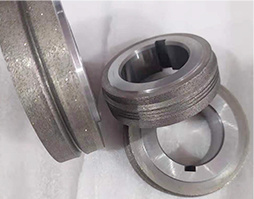
       Diamond dressing wheel

  In addition to this, there are two other methods for using diamond dressing wheels. For example, CNC profiling dressing technology uses CNC devices to program and control the movement trajectory of the diamond wheel to achieve the required profiling surface on the grinding wheel; another method is reciprocating dressing similar to traditional diamond pen dressing trajectories like single-line rolling wheels for taps. These three methods are quite common. If you have any questions that you don't understand, feel free to call us for consultation. There are online customer service personnel here to assist you; no matter what question it is, they will patiently help you answer it. You can also find our contact information on our website; you can call directly for consultation. The manufacturer of diamond dressing wheels insists on innovation and improvement to serve fields such as machining, bearing processing, automotive parts manufacturing, tool measurement instruments, and aerospace industries. The advantage here is having rich engineering design and manufacturing capabilities focused on developing better profiling diamond wheels while providing long-term technical support to maintain stable mass production for customers.


  In summary, the above content has already explainedthe methods of diamond dressing wheel dressing, hoping that friends in need can take a good look at it so that it can help everyone when encountered in the future. In the next issue, we will bring more exciting content.


Related Articles

Using diamond grinding wheels to dress the grinding wheel, the profile is opposite to the required wheel profile, and it moves in the same direction as the wheel being dressed, shaping the wheel into the desired form. The dedicated grinding machine for lock clamps uses diamond wheels to dress the grinding wheel, which is then used to grind valves. The diamond wheels we use are coated with a layer of uniformly distributed diamond particles on a steel substrate through electroplating. When using them, two points must be noted: First, when loading and unloading the diamond wheel, gently tap with a copper rod to prevent diamond particles from falling off. Second, before dressing the grinding wheel with the diamond wheel, it is essential to adjust the relative position of the diamond wheel and grinding wheel in manual mode. For example: The automatic compensation amount for J4-048 lock clamp grinder is 0.01mm with a compensation amount of 50mm. To meet this compensation amount, a grinding wheel grit size of 120# is generally selected. When grinding lock clamp grooves, we dress the grinding wheel once every 20 products, taking 30 seconds for dressing time and maintaining a dressing line speed ratio of 0.59. Sampling tests show that surface roughness Ra is between 0.63 and 1.25μm, and shape and positional accuracy are within 0.03mm, fully meeting customer requirements. Practice has proven that one diamond wheel can produce 60,000 to 80,000 qualified products. The precision of lock clamp grooves mainly relies on the accuracy of the diamond wheels. As a core component of lock clamp groove grinders, the design of its profile is particularly important. Using diamond wheels produced by Dongjin in Henan for dressing grinding wheels ensures high precision and long service life while achieving good surface roughness in workpiece processing, making it especially suitable for mass production.

Mar 18,2022


Researchers in Australia have made breakthrough progress using the power of diamonds, potentially revolutionizing the way the human body accepts biomedical implants. Researchers from RMIT University successfully coated 3D printed titanium implants with diamonds. This is the use of 3D printed diamond implants for biomedical and orthopedic applications, involving surgeries related to the human musculoskeletal system. Although titanium provides a fast, accurate, and reliable material for medical-grade and patient-specific implants, our bodies sometimes reject this material due to compounds on titanium that prevent effective interaction between tissues and bones with biomedical implants. Synthetic diamonds offer a cost-effective solution to this problem. This breakthrough was achieved by biomedical engineer Dr. Kate Fox and her team at RMIT's School of Engineering. The coating was produced using a microwave plasma process at the Melbourne Nano Manufacturing Centre. The combination of titanium scaffolds with diamonds forms a biomaterial. "This technology will take several more years to launch; many steps need to be taken before it can be used by patients," Fox said. "But what we have done is a key step in a long and incredible journey." Postdoctoral researcher Aaqil Rifai is collaborating with Fox on this new technology research, stating, "Diamonds are very effective because carbon is a major component of the human body. Carbon has incredible biocompatibility." Rifai added, "Our bodies easily accept diamonds and use them as platforms for complex material interfaces." In addition to orthopedics, diamonds are also used to coat cardiovascular stents—catheters that help keep heart arteries open—as well as in bionics and prosthetics. Currently, researchers are focusing on how to apply this technology in orthopedics. "3D printing is a groundbreaking revolution in modern times. Through 3D printing, we can design specific medical-grade implants. This technology is fast, accurate, reliable, and labor-saving," Rifai said: "The scalability of 3D printing is rapidly increasing; therefore, we can foresee that diamond coatings will become increasingly common in orthopedics in the near future." Diamonds are one of the special materials found in nature with properties such as hardness, low friction coefficient, high elastic modulus, high thermal conductivity, high insulation properties, wide bandgap, high sound propagation rate, and good chemical stability. Although natural diamonds possess these characteristics, they have only existed as gemstones; their variability and rarity greatly limit their applications. However, CVD diamond films prepared by Luoyang Yuxin Diamond combine these excellent physicochemical properties at a lower cost than natural diamonds and can be fabricated into various geometric shapes with broad application prospects in industries such as electronics, optics, and mechanics.

Aug 16,2021


In June 2020, China's foreign exchange for bearing imports was $368 million, an increase of 10.13% month-on-month and a year-on-year increase of 34.64% compared to June last year, with an increase of 26.47 percentage points from the previous month's growth rate of 8.17%. The number of bearing imports reached 191 million sets, a month-on-month increase of 3.74%, a year-on-year increase of 26.61% compared to June last year, and an increase of 22.61 percentage points from the previous month's growth rate of 4%. As of June 2020, China had accumulated foreign exchange for imports totaling $1.907 billion, which is a year-on-year increase of 12.37%. This is an increase of 4.27 percentage points from last month's rate of 8.1%. The number of imported bearings was 1.151 billion sets, an increase of 15.31% compared to the same period last year, and an increase of 2.02 percentage points from last month's growth rate of 13.29%. From the perspective of imported bearing categories, the foreign exchange for tapered roller bearings increased by 45.98% year-on-year, becoming the main driver for bearing import foreign exchange; followed by bearing parts with a year-on-year growth rate of 25.3%, other ball bearings with a growth rate of 23.24%, cylindrical roller bearings with a growth rate of 15.39%, and spherical roller bearings with a growth rate of 13.73%. It is not difficult to see that under the new situation, significant changes are occurring in the structure of the bearing market. From the perspective of importing countries, foreign exchange from Japan reached $490 million, ranking first with a year-on-year growth rate of 4.61%. Germany ranked second with $420 million in foreign exchange for imports but had a remarkable growth rate of 28.31%. Surprisingly, Taiwan's import foreign exchange for bearings reached $137 million, ranking third with an astonishing year-on-year growth rate of 346%. This indicates that as China's economic structure adjusts, significant changes are also occurring in the market for importing countries for bearings.

Aug 27,2021


Get A Quote

We always uphold the business philosophy of win-win cooperation, look forward to working with you hand in hand, mutual benefit and win-win, create brilliant!

Submit Message

* Note: Please be sure to fill in the information accurately and keep the communication unblocked. We will get in touch with you as soon as possible.